Blog

  • Why Your Business Needs a Human Face to Win in 2026

    Why Your Business Needs a Human Face to Win in 2026

    If you go online today you will see thousands of ads and articles and videos. Most of them look perfect. The images are flawless and the captions are written in a very polished way. This is because by 2026 almost every business is using AI to create their content. But there is a big problem growing in the middle of all this perfection. People are starting to feel bored. They are starting to feel like they are talking to robots all the time. This is where the power of human connection comes in.

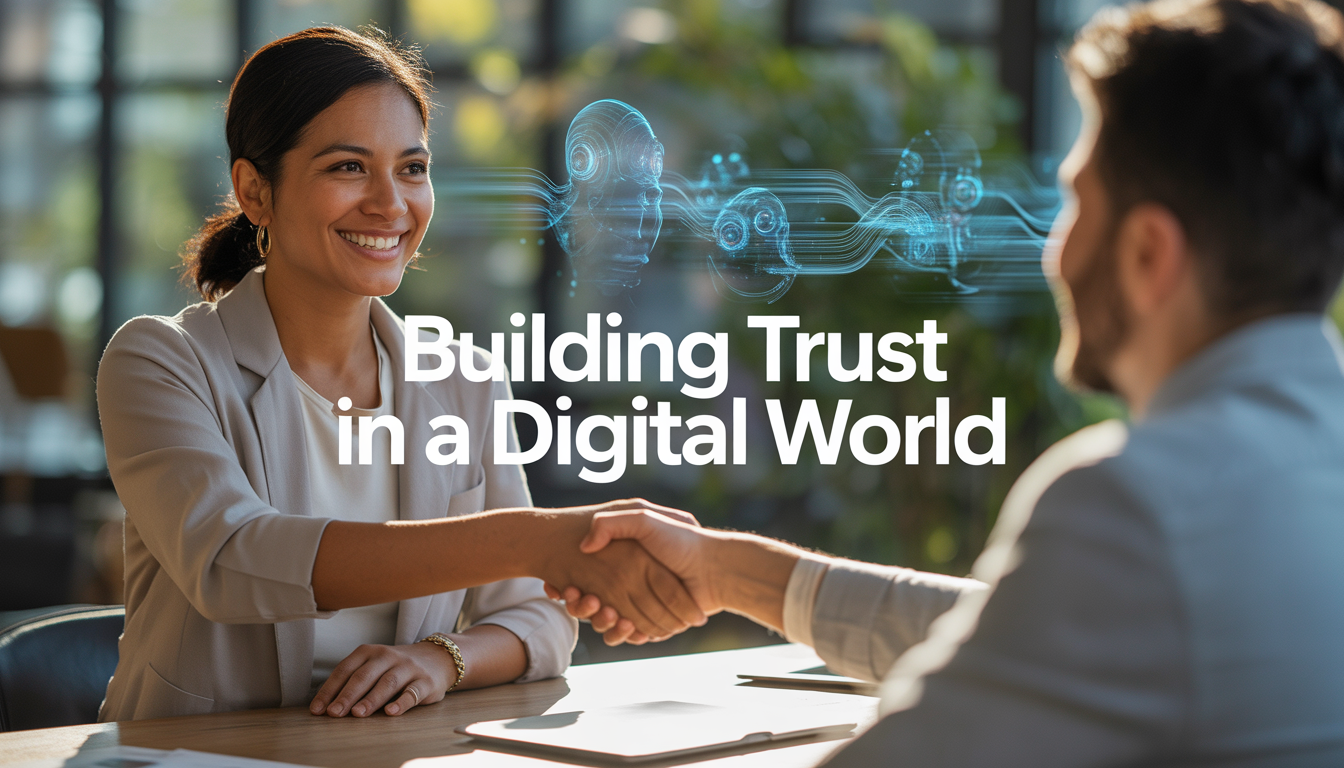
    In 2026 the biggest secret to winning at digital marketing is not a better algorithm or a bigger budget. It is trust. And you cannot build trust with a logo alone. You build trust by showing the human being behind the brand. This is called personal branding and it is the only thing that AI cannot copy.

    The Trust Crisis in the Digital World

    We are living in a time where it is very hard to know what is real. There are deepfakes and AI generated reviews and bot accounts everywhere. Because of this users have become very careful. They do not just want to buy a product anymore. They want to know who they are buying it from. They want to know your values and your story.

    When you hide behind a corporate logo you look like every other big company. But when you step forward and show your face you become a person. People do not feel loyal to a piece of plastic or a digital file. They feel loyal to other people. If a customer trusts you they will stay with you even if a competitor offers a lower price. Trust is the most expensive thing in the world right now and you can get it for free by just being yourself.

    Why Your Business Needs a Human Face to Win in 2026
    Why Your Business Needs a Human Face to Win in 2026

    Why Personal Branding is Your Secret Weapon

    Personal branding does not mean you have to become a famous influencer. It simply means you are making your business more human. Think about your favorite local shop. You probably go there because you like the owner or the staff. You like the way they talk to you. Digital marketing in 2026 needs that same feeling.

    When you share your personal journey it creates a bond. Share the story of why you started your agency. Talk about the mistakes you made and what you learned from them. When you show your struggles people see themselves in you. They realize that you are a real person who works hard to solve their problems. This makes you much more approachable than a giant corporation that only sends automated replies.

    Showing Your Face in a World of AI

    One of the best ways to build this connection is through simple video content. You do not need a big production team. A simple video shot on your phone where you explain a concept or share a tip is enough. In 2026 people value raw and honest content over high budget ads.

    When a potential client sees you talking they hear your voice and see your expressions. They feel like they already know you. By the time they pick up the phone to call you the hard part of the sale is already done. They have already decided they like you. AI can write a script but it cannot replicate your unique energy and your passion.

    How to Build Trust Every Day

    You can build trust by changing the way you interact on social media. Instead of just posting an image and leaving go into the comments. Talk to people like a friend would. If someone asks a question give them a real and thoughtful answer. Do not use a generic template.

    Another way is to show behind the scenes content. Show your office or your team working on a project. Show the messy parts of the job too. This transparency proves that you have nothing to hide. It shows that your business is run by real people who care about their work. In a world of fake perfection being real is a superpower.

    The Balance Between Technology and Heart

    Using AI is great for saving time on boring tasks. You should use it to analyze data or schedule your posts. But you should never let AI handle the heart of your business. Your vision and your personal touch are what make you different.

    If you use AI to write your blogs make sure you go back and add your own stories. Add your own opinions and your own style of speaking. This ensures that the content still sounds like you. The goal is to use technology to reach more people but use your humanity to keep them.

    Final Thoughts

    As we move further into 2026 the businesses that will survive and grow are the ones that people trust. You cannot buy trust with ads. You earn it by being consistent and being human. Do not be afraid to show who you are. Your personality is the only thing your competitors cannot steal.

    When you combine great digital marketing skills with a real human connection you become unstoppable. You move from being just another service provider to being a trusted partner. Stop trying to look like a big corporation and start looking like a real person. That is how you win the hearts of your customers and the top spot on Google.

  • AI-Driven Marketing in 2026: How Small Businesses Can Compete with Giants

    AI-Driven Marketing in 2026: How Small Businesses Can Compete with Giants

    In the past, if you were a small business owner, looking at the marketing budgets of big corporations felt a bit depressing. They had the millions to spend on TV ads, massive billboard campaigns, and huge teams of data scientists.

    But as we move through 2026, the playing field hasn’t just leveled, it has been completely redesigned. Thanks to Artificial Intelligence (AI), a local boutique or a startup agency can now reach the same level of precision and “cool factor” as a global brand.

    The secret? It’s not about who has the most money anymore; it’s about who uses AI most smartly. Here is how your small business can take on the giants and win.

    1. Personalization at Scale (Without the Big Team)

    Big companies used to hire entire departments to track customer behavior and send personalized emails. In 2026, you can do this with a single AI tool.

    AI-driven marketing allows you to treat every customer like they are your only customer. Instead of sending one generic “Sale” email to 500 people, AI analyzes when a specific user is most likely to buy, what colors they like, and what their budget is. It then sends a tailored message at the perfect time.

    The Small Biz Advantage: Because you are smaller, you can be more authentic. While big brands often feel “corporate,” your AI-assisted personalization feels like a genuine recommendation from a friend.

    2. Content Creation: Quality over Quantity

    Remember when you had to spend days writing one blog post or hours editing a 30-second reel? Those days are gone. With generative AI tools, you can now produce high-quality videos, blogs, and social media captions in minutes.

    However, the “Giant-Killer” strategy here isn’t just pumping out a thousand posts. It’s using AI to research what your local audience is actually worried about. If you run a digital marketing agency, don’t just post “SEO tips.” Use AI to find the specific SEO questions people in your city are asking and create content that answers them directly.

    3. Hyper-Local SEO: Dominating the Neighborhood

    Giant corporations struggle with being “local.” They are everywhere, which means they are often nowhere specific. As a small business, your biggest weapon is Local SEO.

    In 2026, AI-powered search engines (like Google’s latest updates) prioritize “intent” and “proximity.” By using AI tools to optimize your Google Business Profile and local keywords, you can ensure that when someone nearby searches for your service, your name pops up before the massive national chain. AI helps you track local trends in real-time, allowing you to pivot your keywords faster than a slow-moving corporation ever could.

    4. 24/7 Customer Service with AI Agents

    One big advantage giants always had was a 24/7 call center. Now, with advanced AI Chatbots (or AI Agents), your small business never sleeps.

    These aren’t the annoying, “I don’t understand” bots from five years ago. 2026 AI agents can handle complex queries, book appointments, and even close sales while you are asleep. This ensures you never miss a lead just because you were busy running the actual business.

    5. Smart Advertising on a Budget

    Predictive analytics used to be a “big tech” luxury. Now, even with a small budget of $10 or $20 a day, you can use AI to predict which ad creative will perform best.

    Instead of guessing and wasting money, AI tests different headlines and images in real-time, funneling your budget into the one that is actually bringing in clicks. This “Micro-Targeting” means your small budget works five times harder than a giant’s “spray and pray” billboard budget.

    The Bottom Line

    In 2026, AI is the “Great Equalizer.” It takes over the boring, repetitive tasks like data entry, scheduling, basic drafting and leaves you with the one thing a machine can’t replicate: Your Vision.

    Small businesses are faster, more agile, and more connected to their communities. When you back that human connection with the power of AI, you don’t just compete with the giants—you outperform them.

  • Beyond the Scroll: Why Social Media is Your Billboard, but Your Website is Your Business

    Beyond the Scroll: Why Social Media is Your Billboard, but Your Website is Your Business

    In 2026, every business owner is a content creator. We spend hours perfecting Reels, chasing trending audios, and battling LinkedIn algorithms. But here is a question that keeps founders awake at night: “If Instagram or LinkedIn disappeared tomorrow, would my business survive?”

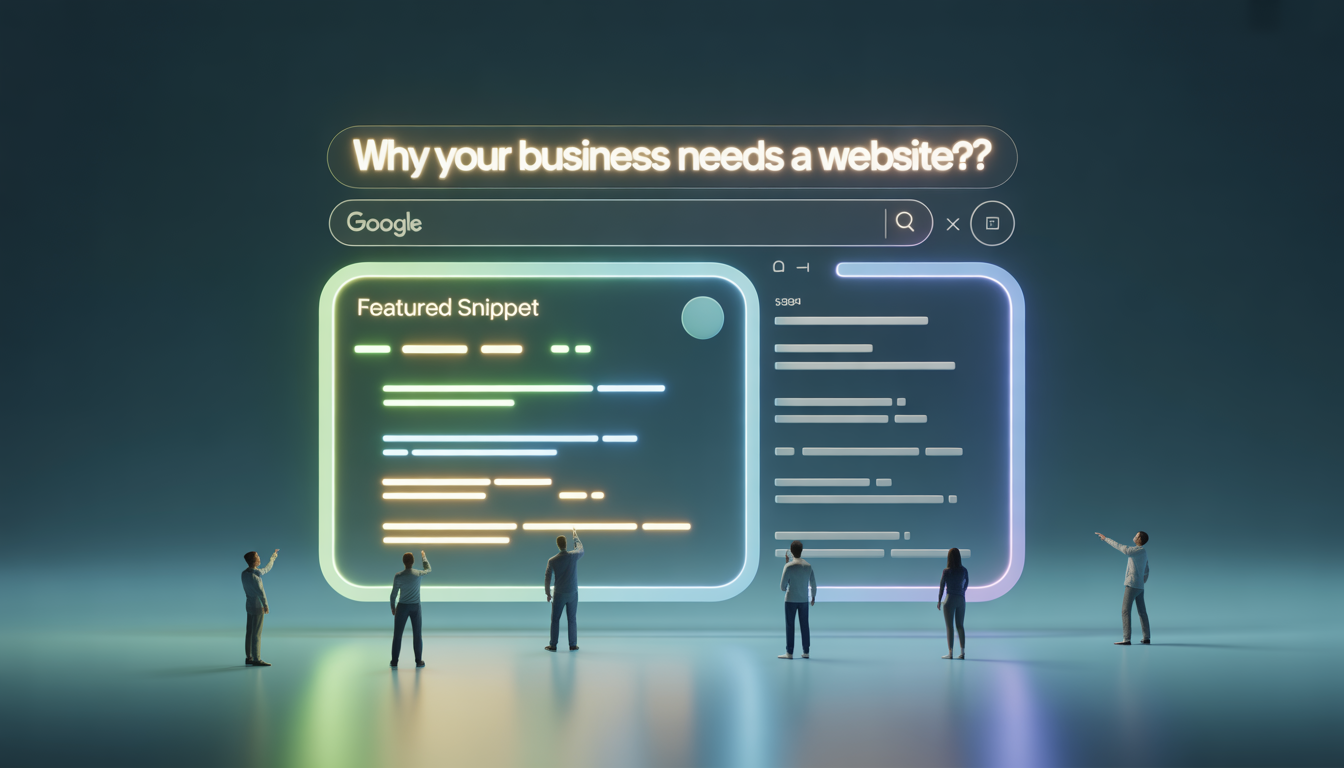
    Social media is a phenomenal tool for discovery. It is the world’s largest “digital highway” where you can put up a billboard. But no one lives on a highway. To build a legacy, you need a foundation. You need a website.

    1. The Trap of “Rented” Attention

    Social media platforms are like rented apartments. You can decorate the walls, but you don’t own the building. If the landlord (the algorithm) decides to change the rules, your reach can drop from 10,000 to 10 overnight.

    A website is your Owned Property. No algorithm can hide your content from your customers on your own domain. It is the only place on the internet where you make the rules.

    2. From Discovery to Decision

    Social media is designed for Distraction. A user sees your post, but one second later, they see a cat video or a competitor’s ad. You are always fighting for attention.

    A website is designed for Focus. Once a customer lands on your site, the noise of the world shuts off. They aren’t scrolling anymore; they are reading your case studies, looking at your pricing, and understanding your value. This is where a “follower” becomes a “client.”

    3. Professionalism That Social Media Can’t Mimic

    While a DM (Direct Message) is a great way to start a conversation, a professional “Contact Us” form or a “Book a Discovery Call” button on a website signals authority.

    In 2026, high-ticket clients use social media to find you, but they use your website to vet you. They want to see your portfolio in high resolution, read long-form testimonials, and know that you are a stable, established entity, not just a trending profile.

    4. The Power of Intent-Based Search

    Social media shows your content to people who might be interested. Google shows your website to people who are actively looking for you.

    When someone searches for a solution, they aren’t looking for a Reel; they are looking for an answer. By having an SEO-optimized website, you are positioning your business to be the answer to their most urgent problems.

    5. Data: The Real Gold of 2026

    On social media, the platform owns the data of your followers. On your website, you own the data. Through newsletters and analytics, you can understand exactly what your customers want and reach out to them directly via email, the most conversion friendly channel in history.

    Conclusion: The Perfect Partnership

    Social media is for the “handshake,” but your website is for the “contract.” We aren’t saying stop using social media; we are saying use it correctly. Use social media to grab attention and “invite” people back to your website.

    Don’t build your kingdom on rented land. Build it on a foundation that you own.

  • Zero-Click Content Strategy: How to Scale Your Brand in 2026 Without Website Clicks

    Zero-Click Content Strategy: How to Scale Your Brand in 2026 Without Website Clicks

    In the early days of digital marketing, success was measured by a simple metric: The Click. You wrote a catchy headline, shared a link, and prayed the user would land on your website. Fast forward to 2026, and the rules of the game have fundamentally changed.

    If you have noticed that your organic reach is dipping while your engagement stays steady, you are likely experiencing the “Zero-Click” era.

    What Exactly is Zero-Click Content?

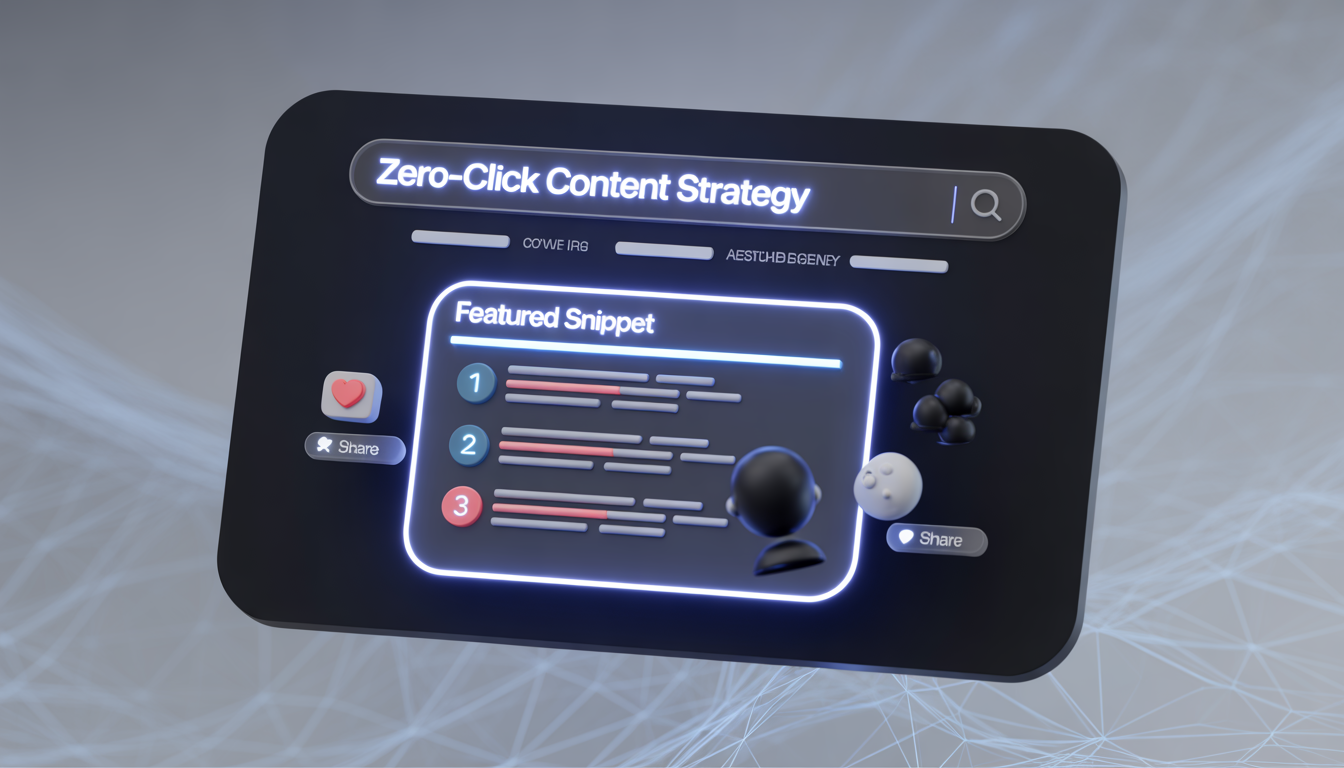
    Zero-click content is a strategy where you provide the full value, insight, or answer directly within the social media post or search engine result page (SERP). The user gets exactly what they need without ever having to leave the platform or click a “read more” link.

    Whether it is Google’s Featured Snippets or a detailed LinkedIn carousel, the goal is to satisfy the user’s curiosity immediately.

    Why Platforms Love It (And Why You Should Too)

    Social media platforms like LinkedIn, Instagram, and X have one primary goal: Retention. They want users to stay on their platform as long as possible. When you post a link that takes a user away to your website, the algorithm views it as a “leak” and often suppresses the reach of that post.

    However, when you provide high-value content natively, the algorithm rewards you with massive reach. Even though you aren’t getting a website “hit,” you are gaining something far more valuable: Top-of-mind awareness.

    How to Build a Zero-Click Strategy for Your Agency

    1. The “Value-First” Hook

    In 2026, attention is the new currency. Your first line must provide a massive reason to stop scrolling. Avoid clickbait; instead, use “Value-Bait.”

    • Weak: “Check out our latest SEO tips on our blog.”
    • Strong: “Google just updated its algorithm again. Here are 3 things you must change today.”

    2. The Inverted Pyramid Method

    Do not save the best for last. Give the core answer or the “aha!” moment in the first 20% of your post. Use the remaining 80% to provide context, data, and nuances for those who want to dive deeper. This builds instant trust.

    3. Optimize for Native Consumption

    Every platform has a “native” language.

    • LinkedIn: Use “Native Documents” (Carousels) to break down complex case studies.
    • X (Twitter): Use threads to tell a story where each tweet adds standalone value.
    • Google: Use structured data, lists, and tables. If Google can scrape your answer for a snippet, you become the authority for that search term.

    4. The Shift from Traffic to Trust

    You might ask: “How do I make money if they don’t visit my site?” The answer is simple: High-Intent Inbound Leads. By giving away your best secrets for free on the feed, you prove you know your stuff. When a client is ready to hire an agency, they won’t go to Google to search; they will go to the person whose posts have been helping them for months.

    Conclusion: Giving to Gain

    Zero-click content isn’t about losing traffic; it’s about winning the brand war. By satisfying the user’s intent immediately, you reduce friction and build an indestructible reputation. In the digital landscape of 2026, the brand that helps the most, wins the most.